Journalling; why, what, where, when ...! (+ 12 journalling prompts!)
/
Journalling
Journalling is one of my favourite things. Since I was a young teen I have reached for a diary or notebook and written. It started off as a description about what I was up to, who I was seeing etc. My beloved pony Smokey featured a lot (!!)… but slowly it became more reflective, more like having a conversation with myself.
Through journalling my understanding of myself deepened, strengthened and clarified. Increasingly I found I was able to find answers to worries that were causing knots in my mind …the simple act of getting what was on my mind out and onto paper helped create space for reflection and perspective.
I remember distinctly turning to my diary when I was feeling confused and overwhelmed about the path I should take after 6th form. As I wrote out my worries about studying history of art (as was the plan), I reflected on how much I loved simply being in the art studio, creating …and it led me to face my fear & belief that I wasn’t ‘good enough at art’ and apply to art school.
What’s my Why?
Before starting a new habit or routine it’s helpful to have a clear understanding of your Why. Why are you starting a diary / journalling practice in the first place? Having a clear Why will keep you anchored when the habit to write inevitably wobbles or you take a break.
My Why is that I write in my diary to support my mental health, it helps me to pause, reflect and clear my busy, buzzy mind. My over arching Why is that I want to be a grounded & present mum, partner, friend, daughter & sibling. Supporting my mental health through journalling is one of the tools I use from my toolkit that helps me to achieve this.
Your Why may be something completely different. You may wish to capture a special time in your life like early motherhood or your travels. You may wish to keep a diary to stay organised, keep a list of to-do’s, or to solely gather glimmers or a gratitude list.
What are my tools?
Essentially of course you can use anything …some blank paper, the back of an envelope, a freebie pen. It doesn’t need to be fancy.
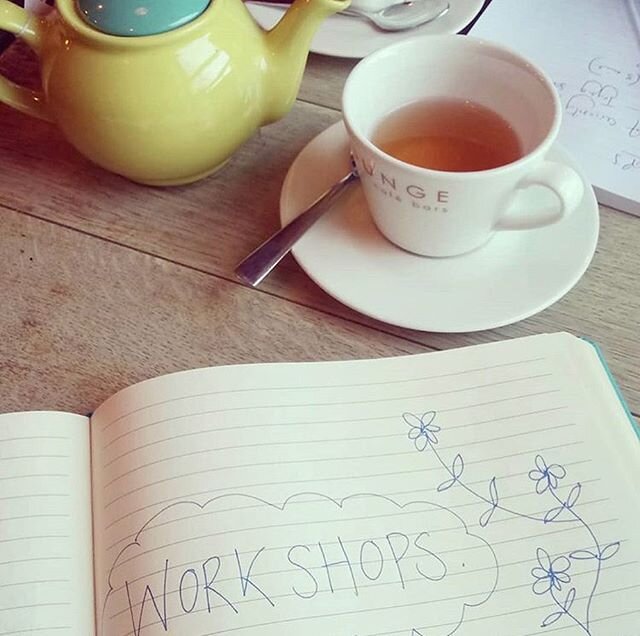
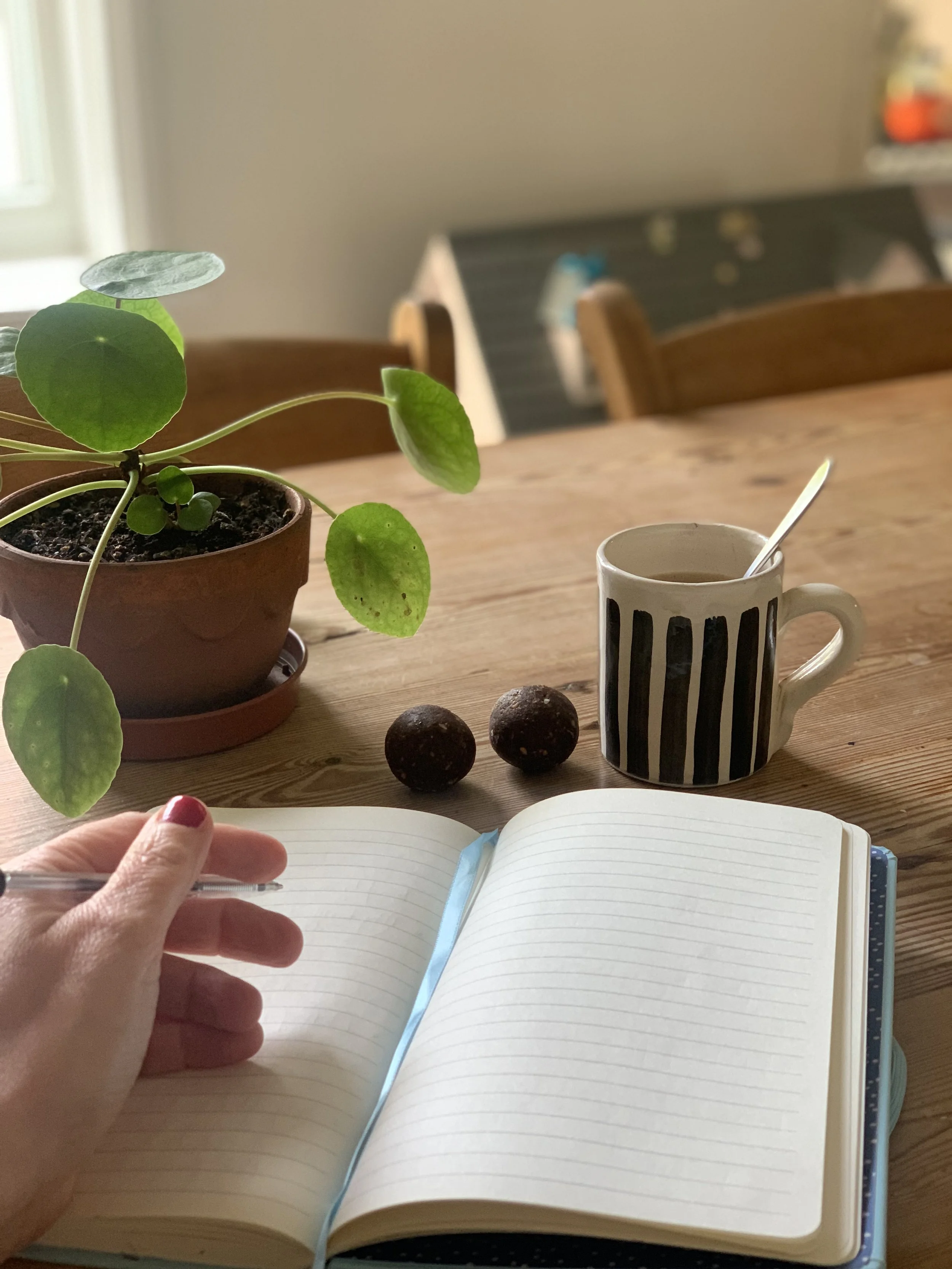
That said, it can feel so lovely to reach for a diary that feels a little special; perhaps it’s your favourite colour or feels nice to hold. Choosing a pen that feels comfortable to hold & glides as you write - makes it a pleasurable and tactile experience and you’ll be more likely to keep it up!
To mark a new year or new chapter in your life with a fresh, carefully chosen diary can be a lovely ritual (a la Bridget Jones!!).
Honestly? Right now my go to is a £1 notebook from The Works and a Bic biro!! But I’m looking forward to treating myself to something a little fancy for my birthday present to myself!!
When will I do it?
Exactly when the best time for you to write may take some time to figure out. Some like to journal as soon as they wake up, with a freshly brewed coffee beside them. However, if like me you are in a season of young children, making a morning journalling practice impossible, you could keep it beside your bed to write out the days events at the end the day, or write during nap times, in the car after the school run, or on your lunch break.
Don’t be afraid to switch it up if it’s not working for you. There is no right or wrong way or time to write, only what suits you.
What’s my set up?
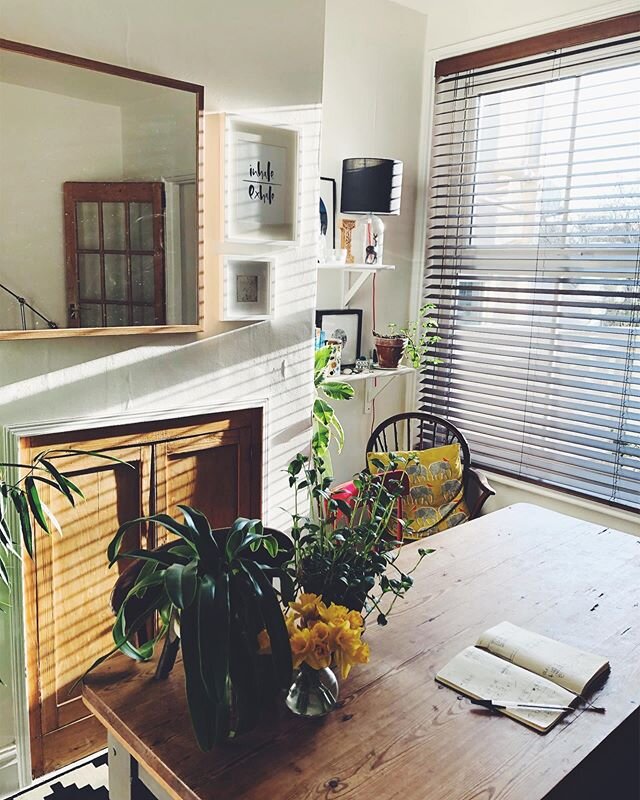
Setting the scene for your journalling practice can really help with bringing some intentionality to the whole experience especially when you are first anchoring the habit. For example, lighting a candle, putting on a specially curated soundtrack, grabbing a cup of tea in your favourite mug, or inhaling some essential oil; one or all of these things signal to your body and mind that ‘I’m pausing to take a moment for myself’.
Life won’t always offer you the time and space however, and these days, more often than not, I write in snatched moments, often just before school pick up! Your practice will shift and adapt as your life does and that’s ok. But I know I feel better for even 5 minutes of writing, so I keep carving out the time for it :)
How long do I write for?
There is no right or wrong here. Some days you may simply list the worries on your mind for 5 minutes, other days you may write a stream of consciousness for half an hour. Simply start and see what you need on that given day.
What do I write exactly?!
Again, and you’ll notice I’m repeating myself here!, but there is no right or wrong here. No one is going to read it, it’s not for an exam or presentation. This is your private space to share what’s on your mind.
That said, it can be helpful to have some questions up your sleeve.
Here are a few different prompts and techniques I pick up from time to time;
- Write a list of what’s on my mind or worrying me right now. - what steps can I take to ease the worry?
- What do I need today?
- What loving action can I take for myself today?
- How am I feeling today? Where do I feel this feeling in my body? If this feeling had a voice, what would it say?
- What would my best friend say to me about x, y or z.
- What made me smile today? - What's one thing I can do to make tomorrow better?
- What is something that has made me happy recently?
- What changes could I make to my daily routine to make myself feel happier and healthier?
- What are 3 glimmers that I noticed today.
- What are three things I'm feeling grateful for?
- Write out an event or conversation that feels uncomfortable and offer a compassionate view of it.
- Write a ‘day in the life’ of me in 5 / 10 / 15 / 20 years time, to inspire small steps towards the life I hope for.
- Author of The Artist’s Way, Julia Cameron suggests writing morning pages; 3 (A4) pages of stream of consciousness every morning. Start with something inane like ‘I can here the kitchen tap dripping’ or ‘it was raining all day today’ .. and see where it leads. It helps to clear your mind like turning an old tap on and letting it splutter all the silt out before running clear. (NB; Julia Cameron often uses the word God to describe her creative experience, which can feel conflicting for some and may create a barrier to accessing the rich & revealing exercises. I choose to take her suggestion given in the book and switch up God for ‘creative flow’, ‘Universe’ or ‘creative energy’. Choose what feels right for you :)
What if it feels uncomfortable?
Occasionally difficult feelings may come to the surface as you write; grief, resentment, jealousy or deep emotional pain. If this happens, pause and take some deep breath’s. Remind yourself that you are safe, and the feelings are just coming up to give you information. It’s also important to remember that you are not your feelings, they are just passing through you.
Perhaps note down the feelings that are coming up and close your diary for that day / session.
Go and do something kind and compassionate for yourself, perhaps you need to release the feeling by crying, moving (shaking/walking/dancing) or talking about it with a trusted friend or partner.
Of course if the uncomfortable feelings persist talking to your GP or a mental health professional can be a good idea.
If you’re feeling called to journal or are curious as to why people love it so much I really urge you to just give it a go!
—————————————————————————-
I’m Issie. I’m a Life & Creativity coach.
I work with women who struggle with negative self talk, overwhelm and people pleasing.
They often come to me at a moment of transition, either in work, relationships or motherhood, & are generally feeling unsatisfied with how life is.
I love using creativity as one of my main tools because research (& my own lived experience) shows that having a creative practice overwhelmingly increases peoples happiness, life satisfaction and sense that life feels worthwhile.
As a coach I offer support and structure at a point when women are re-discovering themselves, so that they can go forward in life with greater confidence in who they are.
You can discover more about me & ways you can work with me in the 1-1 Coaching section on my website :)